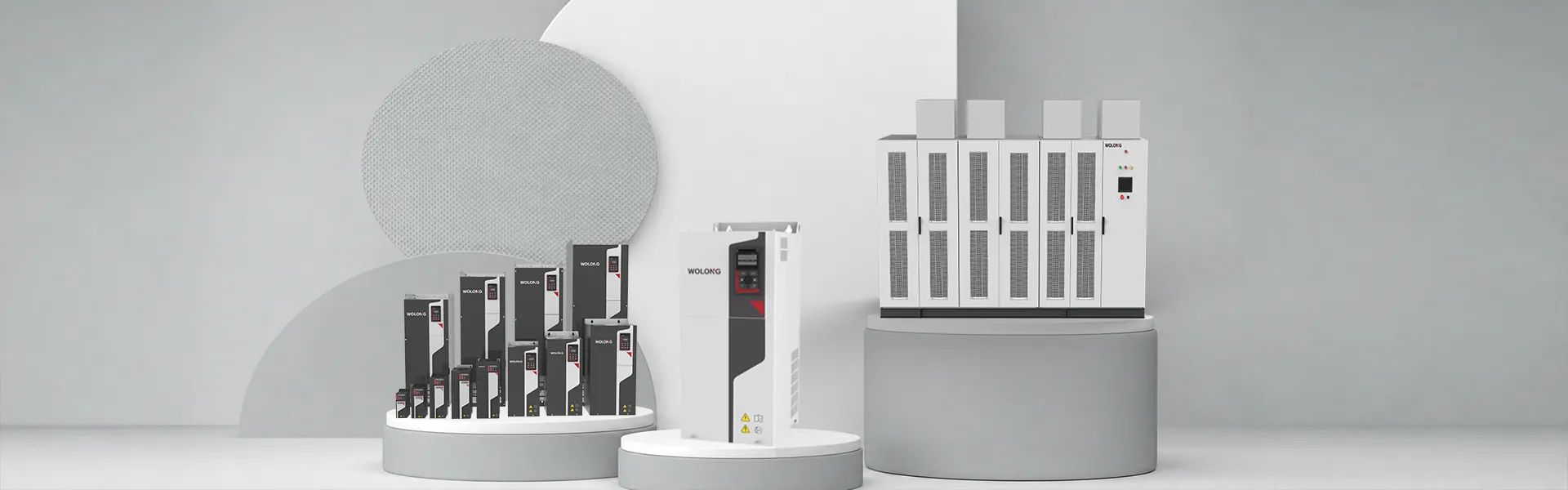
Variable frequency drives (VFD) are widely used to control the speed of 3 phase asynchronous AC motors. Improper configuration of frequency limits and control modes during commissioning often leads to motor overheating, winding burnout or VFD damage. Mastering the practical rules for low frequency speed regulation and high frequency speed increase is critical for stable drive system operation.
The basic logic of VFD upper and lower frequency limits is straightforward. Under normal speed control mode, if the set frequency exceeds the upper limit, the system locks the output at the maximum allowed frequency. If the set value falls below the lower limit, the output is fixed at the minimum frequency. Between lower and upper limits, the VFD ramps frequency smoothly over a defined acceleration time, preventing sudden current surges and maintaining stable motor torque output.
A common confusion occurs in closed loop vector torque control mode. Unlike speed mode, this control loop prioritizes torque rather than frequency reference. When the torque setpoint is high, or when the load pulls the motor into passive generation status, the actual running frequency may break the preset upper frequency limit. This is normal operating behavior instead of a fault, as torque mode frequency is not bounded by routine frequency limit parameters.
For standard 50Hz general-purpose motors, typical rated frequency is 50Hz. A VFD can theoretically reach up to 100Hz (twice rated speed). For on-site stable operation, the recommended upper setting is 60Hz. Although some VFDs support 135Hz output, ordinary motors lack sufficient mechanical strength and heat dissipation at ultra-high frequency; running above 100Hz causes severe bearing and winding wear. Long-term high-frequency operation requires dedicated high-speed motors and oversized VFD capacity. For motors with base frequency of 33.3Hz, adjusting the VFD base frequency to 50Hz converts the motor equivalent to a 6-pole unit.
Low-frequency operation rules also vary by VFD type. For standard V/F control VFDs, the stable lower limit is approximately 5Hz. Heavy-load starting below 5Hz often fails. Ordinary motors have low rotating speed and poor self-ventilation at low speed, which may burn the motor after long-time operation. High-end vector VFDs deliver sufficient low-frequency torque, supporting stable operation down to 0.1Hz under light loads with smooth start-stop and low overheating risk.
Correctly configuring VFD frequency limits and selecting proper control modes protects the electric motor and drive system, avoiding costly field failures.
Contact Us
Be the first to know about our new product launches, latest blog posts and more. Founded in 1984, Wolong is a global leader in motor and drive technology, providing safe, efficient,... Any question or request?
Click below, we’ll be happy to assist. Contact Us