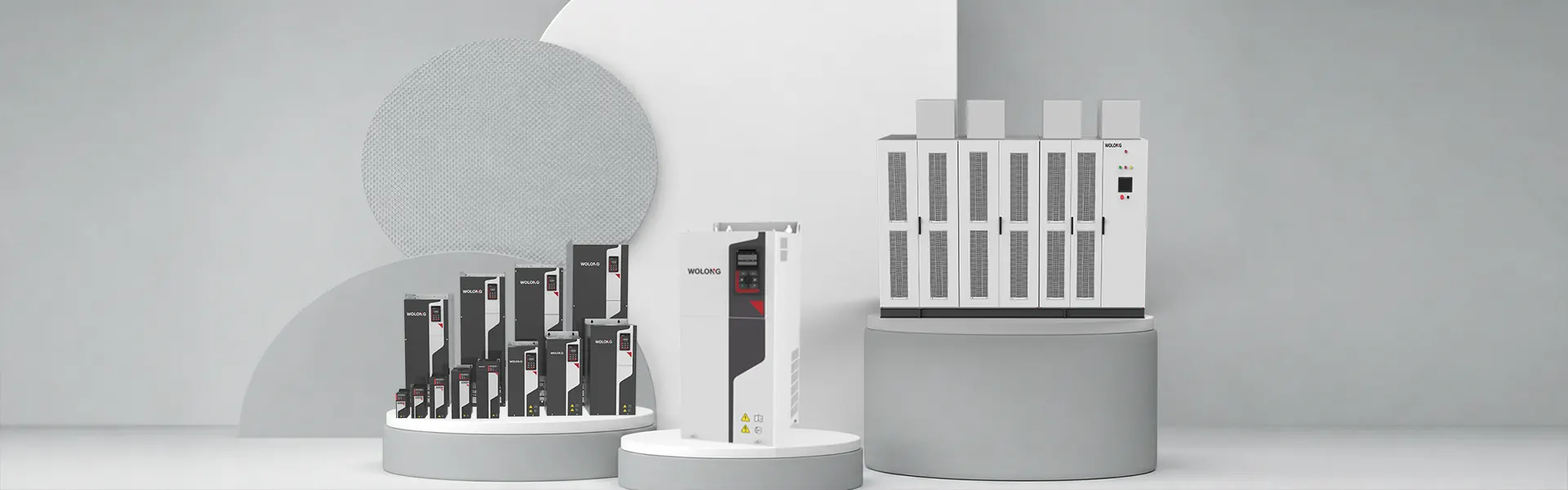
In industrial applications, low-voltage variable frequency drives (VFDs) are widely used to control motor speed, improve energy efficiency, and optimize process performance. However, the use of VFDs also introduces electrical disturbances that may affect the power supply system and nearby equipment.
For overseas industrial projects, electromagnetic compatibility (EMC) is an important consideration during VFD selection and system design. Understanding the requirements for harmonics, electromagnetic interference, and filter selection can help engineers achieve reliable operation and reduce commissioning risks.

Electromagnetic compatibility refers to the ability of electrical equipment to operate properly in its electromagnetic environment without causing unacceptable interference to other equipment.
For VFD applications, EMC mainly involves two aspects:
Emission: The electromagnetic disturbances generated by a VFD must remain within acceptable limits.
Immunity: The VFD and associated equipment must be able to operate correctly when exposed to electromagnetic disturbances from other sources.
EMC requirements are particularly important in industrial facilities where VFDs operate alongside PLCs, sensors, communication networks, instrumentation, and other sensitive electrical equipment.
In international projects, IEC 61800-3 is a key standard for EMC requirements applicable to adjustable-speed electrical power drive systems. The applicable requirements depend on the installation environment, equipment category, and project specifications.
Although harmonics and electromagnetic interference are both related to power electronics, they are not the same phenomenon.
Harmonic distortion occurs when the current or voltage waveform contains frequency components that are integer multiples of the fundamental frequency. In a VFD system, harmonic currents are primarily associated with the rectifier and DC-link circuit.
These currents can cause additional heating in transformers, cables, and other electrical equipment. They may also affect power factor and increase losses in the electrical distribution system.
Electromagnetic interference (EMI) refers to unwanted electrical or electromagnetic disturbances that may affect the operation of other equipment. In VFD applications, EMI is commonly associated with high-frequency switching, rapid voltage changes, and common-mode currents.
EMI may interfere with communication signals, measurement instruments, or control systems if the installation is not properly designed.
In simple terms, harmonics are generally associated with power quality at lower frequencies, while EMI is commonly associated with high-frequency electrical disturbances.
EMC requirements vary depending on the country, installation environment, and project specifications.
For example, a VFD installed in a general industrial facility may have different requirements from one installed in a chemical plant, offshore platform, or facility with sensitive instrumentation.
Project engineers should consider the following factors:
Applicable standards, such as IEC 61800-3 and IEC 61000 series standards.
The electrical network characteristics, including transformer capacity and short-circuit impedance.
The presence of sensitive equipment, such as PLCs, communication systems, and instrumentation.
The required harmonic limits at the point of common coupling (PCC).
The motor cable length, grounding arrangement, and installation environment.
It is important to distinguish between the EMC requirements for the VFD itself and the harmonic limits specified for the entire electrical installation.
A VFD may comply with its product EMC requirements, but additional measures may still be necessary to meet the project's overall power quality requirements.
Different filters address different types of electrical disturbances. Selecting the appropriate solution requires understanding the actual problem rather than simply adding a filter to the system.
An input line reactor is installed on the AC supply side of a VFD. It helps limit current distortion, reduce the impact of voltage transients, and improve the robustness of the input power circuit.
Line reactors are commonly used in industrial applications where moderate harmonic reduction and additional input impedance are required.
However, a line reactor alone may not be sufficient when a project specifies strict harmonic limits.
A passive harmonic filter uses inductors, capacitors, and sometimes resistors to reduce selected harmonic components.
It is suitable for applications with relatively predictable operating conditions and specific harmonic reduction requirements.
The filter must be selected according to the VFD rating, harmonic spectrum, network impedance, and expected operating load. Improper selection may introduce resonance or cause additional harmonic amplification.
An active harmonic filter uses power electronics to compensate for harmonic currents dynamically.
It is often considered in installations with multiple nonlinear loads, changing operating conditions, or more demanding harmonic requirements.
Compared with passive solutions, active filters generally offer greater flexibility, but they also involve additional cost, installation space, and system integration considerations.
An EMC input filter is designed primarily to reduce high-frequency conducted electromagnetic emissions from a VFD.
It is commonly installed between the power supply and the VFD. The filter should be selected according to the drive's voltage, current, EMC category, and grounding arrangement.
An EMC input filter is not a substitute for a harmonic filter. The two serve different purposes and may both be required in the same installation.
Output reactors and sine-wave filters are installed between the VFD and the motor.
An output reactor helps reduce voltage rise time and can improve the performance of long motor cables.
A sine-wave filter provides additional attenuation of the PWM switching components, producing a motor voltage waveform closer to a sinusoidal waveform.
These solutions are particularly useful when long motor cables, motor insulation stress, or high-frequency interference are important concerns.
Before selecting a filter for an overseas project, engineers should confirm the following information:
VFD rated voltage, power, and input current.
Motor rated power, voltage, and operating frequency.
Required harmonic limits and the location where compliance must be verified.
Applicable EMC standards and project specifications.
Motor cable type, length, and installation arrangement.
Grounding system and the presence of residual-current monitoring devices.
Whether the project requires harmonic mitigation, EMI reduction, or both.
For demanding applications, a system-level assessment may be necessary to verify the expected performance under different operating conditions.
EMC and harmonic control are essential considerations in low-voltage VFD applications, especially in overseas industrial projects with strict technical specifications.
The correct filter selection depends on the type of disturbance, the electrical network, and the project's compliance requirements. Input reactors, harmonic filters, EMC filters, and output filters each serve different purposes.
By identifying the actual requirements early in the design stage, engineers can select a suitable VFD configuration, improve system reliability, and avoid unnecessary equipment costs during installation and commissioning.
Contact Us
Be the first to know about our new product launches, latest blog posts and more. Founded in 1984, Wolong is a global leader in motor and drive technology, providing safe, efficient,... Any question or request?
Click below, we’ll be happy to assist. Contact Us