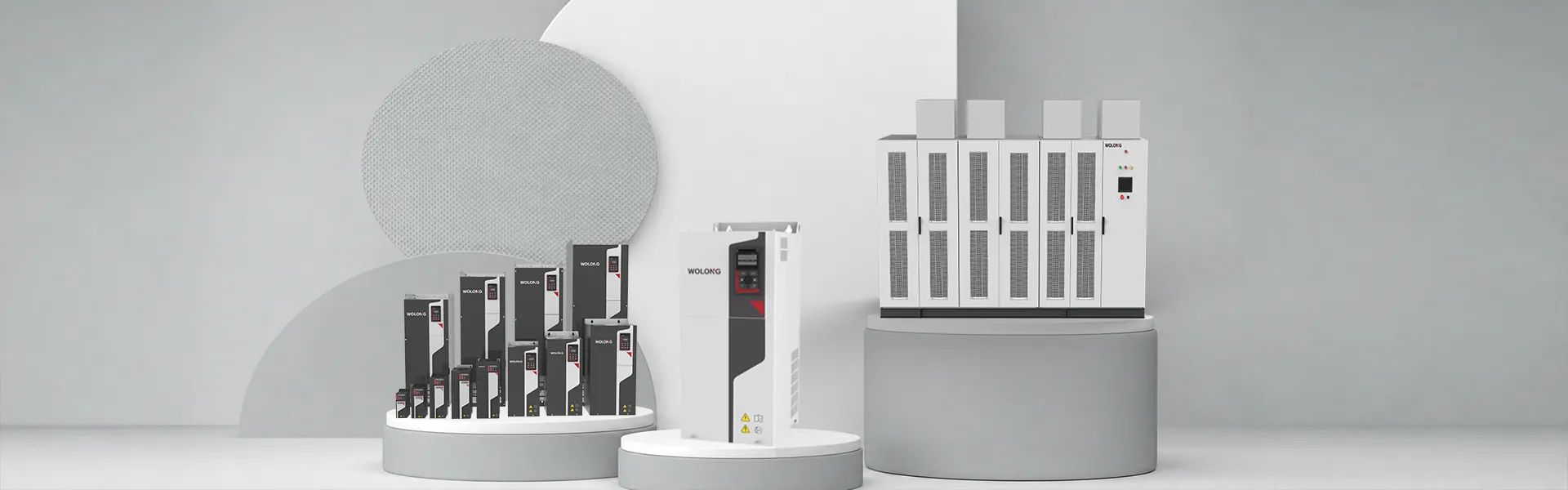
A Variable Frequency Drive (VFD) is one of the most important technologies in modern industrial automation. Combining power electronics, microprocessor control, and motor control technology, a VFD enables precise speed regulation, energy saving, and improved equipment performance.
Because VFD systems involve both high-voltage power circuits and low-voltage control systems, they can experience various operating issues during installation, commissioning, and daily operation. Understanding how a VFD works and how to troubleshoot common problems is essential for engineers, technicians, and industrial users.
A Variable Frequency Drive converts fixed-frequency AC power from the electrical grid into adjustable-frequency and adjustable-voltage AC power for electric motors. By controlling semiconductor switching devices such as IGBTs (Insulated Gate Bipolar Transistors), the VFD can precisely regulate motor speed, torque, and operating performance according to application requirements.
With excellent speed control capability, wide operating range, soft-start function, high efficiency, and reduced mechanical impact, VFDs have become essential components in modern industries.
Today, VFDs are widely used in manufacturing, chemical processing, metallurgy, HVAC systems, water treatment, oil & gas, mining, and many other industries. Applications such as fans, pumps, compressors, and conveyors benefit significantly from VFD technology due to improved energy efficiency and operational flexibility.
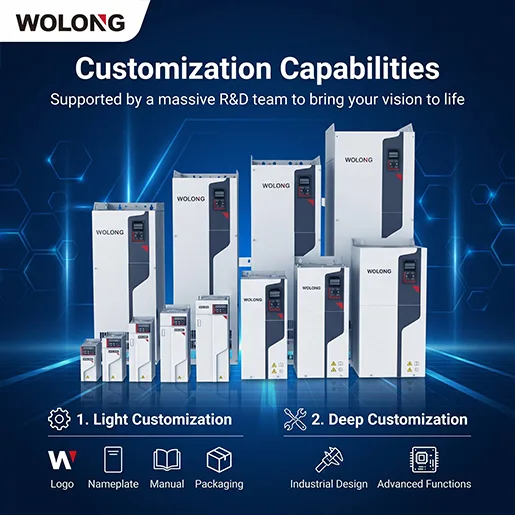
A modern VFD consists of several key sections:
The rectifier converts incoming AC power into DC power.
The DC bus contains capacitors and filtering components that stabilize the converted power.
The inverter uses IGBT switching technology to convert DC power back into variable-frequency AC power.
The microprocessor-based control unit manages frequency output, motor protection, communication, and application parameters.
Sensors detect abnormal conditions such as overcurrent, overvoltage, overheating, and phase faults to protect both the drive and motor.
Advances in semiconductor technology, digital control, and motor algorithms have significantly improved VFD performance and reliability.
Frequency resolution determines the smallest frequency change that a VFD can output.
For digitally controlled VFD systems receiving analog frequency commands, the typical frequency resolution range is approximately 0.015 Hz to 0.5 Hz.
Higher frequency resolution is important for applications requiring precise speed control, such as:
Continuous winding machines
Precision processing equipment
Textile machinery
Printing systems
Acceleration and deceleration parameters determine how quickly a motor changes speed.
The correct setting depends on the application:
Machine tools may require separate acceleration and deceleration settings to maintain production accuracy.
Fans and pumps usually use longer acceleration and deceleration times to reduce mechanical stress.
Heavy-load systems require carefully calculated ramp times to prevent overcurrent trips.
Incorrect ramp settings may cause motor overload, excessive current, or unstable operation.
When a motor slows down faster than its natural mechanical deceleration, it can operate as an induction generator and return energy to the VFD DC bus.
This process is called regenerative braking.
The regenerated energy is stored temporarily in the DC link capacitors.
For standard VFDs, the braking torque is usually around:
10%–20% of rated motor torque
By adding a braking unit and braking resistor, braking capability can increase significantly:
Approximately 50%–100% of rated torque
Regenerative braking solutions are commonly required in:
Cranes
Elevators
Hoisting equipment
High-inertia machines
When stronger braking capability is required, engineers should consider:
DC bus capacitor capacity
Voltage tolerance
Braking unit selection
Braking resistor capacity
Motor inertia
A properly designed braking system prevents overvoltage faults and improves equipment safety.
Modern VFDs include multiple protection functions, such as:
Overcurrent protection
Overvoltage protection
Undervoltage protection
Overtemperature protection
Short-circuit protection
Motor overload protection
These functions automatically adjust operation or disable power semiconductor switching signals to prevent damage to the VFD and motor.
When a motor is connected to a mechanical load through a clutch, sudden load connection may cause a large current spike.
Possible solutions include:
Engage the clutch gradually.
Increase VFD capacity.
Adjust acceleration parameters.
Use torque control functions.
Proper mechanical coordination between the motor and load is essential for stable operation.
Starting large motors on the same transformer network may cause:
Voltage drops
Temporary power interruptions
VFD undervoltage faults
Solutions include:
Increasing transformer capacity.
Using soft starters.
Separating critical loads.
Improving power distribution design.
A motor may stall if acceleration time is too short or the load is too heavy.
The VFD stall prevention function monitors output current and automatically adjusts frequency to prevent motor instability.
This helps maintain smooth operation during:
Acceleration
Deceleration
Heavy-load conditions
Proper installation is important for heat dissipation.
General recommendations:
Install the VFD vertically whenever possible.
Maintain sufficient ventilation space.
Follow manufacturer clearance requirements.
Avoid blocking cooling air channels.
Poor installation can significantly reduce VFD lifetime.
Overvoltage alarms commonly occur during stopping or rapid deceleration.
Typical causes include:
Deceleration time too short.
Insufficient braking resistance.
Faulty braking unit.
High motor regenerative energy.
Solutions:
Increase deceleration time.
Check braking resistor condition.
Install a suitable braking system.
Excessive VFD temperature may result from:
High ambient temperature.
Poor ventilation.
Cooling fan failure.
Dust accumulation.
Excessive load.
Preventive maintenance should include:
Cleaning heat sinks.
Checking cooling fans.
Ensuring proper airflow.
Monitoring operating temperature.
Overcurrent is one of the most common VFD alarms.
Possible causes include:
Motor short circuit.
Mechanical blockage.
Incorrect motor parameters.
Damaged inverter module.
Insufficient motor torque.
Troubleshooting steps:
Check motor and mechanical load.
Verify motor wiring.
Confirm motor nameplate parameters.
Check VFD settings.
Inspect hardware if necessary.
Direct high-frequency starting can create excessive starting current and cause VFD overcurrent trips.
Using VFD soft-start functions provides:
Lower starting current.
Reduced mechanical shock.
Longer equipment lifetime.
Improved power system stability.
Running motors above 60 Hz requires careful consideration.
Engineers should evaluate:
Mechanical strength.
Bearing speed limitations.
Noise level.
Vibration.
Cooling capability.
Available motor torque.
When a motor enters the constant power range, torque capability decreases as speed increases.
Always confirm motor suitability before high-speed operation.
VFDs that remain unused for long periods may experience:
Cooling fan bearing lubrication deterioration.
DC bus capacitor aging.
Electrolytic capacitor leakage.
Reduced insulation performance.
Recommended actions:
Perform regular inspections.
Power up stored equipment periodically.
Check capacitors before restarting.
Follow manufacturer storage guidelines.
Variable Frequency Drives are essential technologies for modern industrial motor control. Understanding VFD structure, operating principles, parameter settings, protection functions, and troubleshooting methods helps engineers improve system reliability and reduce downtime.
With proper installation, commissioning, and maintenance, VFD systems can deliver significant benefits:
Lower energy consumption
Improved motor performance
Reduced mechanical stress
Increased production efficiency
Longer equipment lifetime
WOLONG provides reliable VFD solutions designed for industrial applications worldwide, supporting customers in achieving efficient, safe, and intelligent motor control.
For more information about WOLONG Variable Frequency Drives, please contact:
Email: [email protected]
Contact Us
Be the first to know about our new product launches, latest blog posts and more. Founded in 1984, Wolong is a global leader in motor and drive technology, providing safe, efficient,... Any question or request?
Click below, we’ll be happy to assist. Contact Us